
Heart Valve Disease Treatment in Delhi NCR
Feeling breathless climbing stairs? Noticing your heart skip or flutter? These could be early signs of a valve problem, and they’re more common, and more treatable, than most people realise. Dr. Biswarup Purkayastha offers advanced heart valve disease treatment in Delhi NCR at Artemis Hospitals, Gurugram, covering everything from valve repair to minimally invasive replacement. This page walks you through heart valve problems and symptoms, treatment options, and costs, in plain language.
What Is Heart Valve Disease?
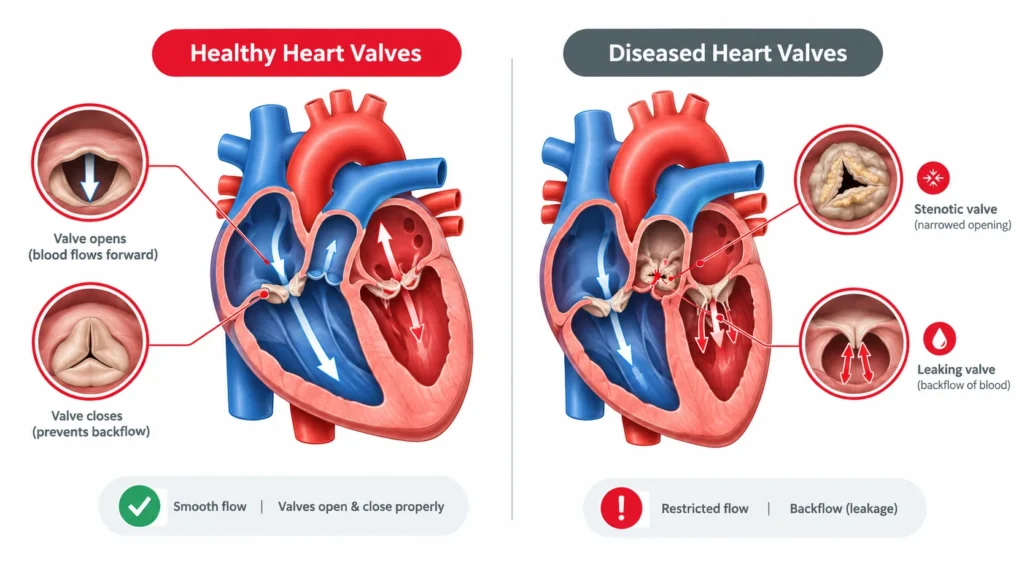
Heart valve disease occurs when one or more heart valves fail to open or close properly, making the heart work harder to pump blood.
- Your heart has four valves that open and close to keep blood flowing in one direction.
- What is heart valve failure? It’s when a valve doesn’t open fully (stenosis) or doesn’t close properly (regurgitation/leakage), forcing your heart to work harder.
- Left untreated, this strain can lead to heart failure over time.
- Valve disease can be present from birth or develop later due to age, infection, or wear and tear.
Symptoms and Warning Signs
Knowing the first signs of heart valve problems early can make treatment simpler and safer. Early warning signs of heart valve disease include breathlessness, fatigue, palpitations, and swelling in the legs or feet.
- Breathlessness during routine activity or while lying flat
- Fatigue and reduced stamina
- Palpitations or irregular heartbeat
- Swelling in ankles, feet, or abdomen
- Dizziness or fainting spells
- Chest discomfort or tightness
Blockage in heart valve symptoms (valve stenosis) often include breathlessness on exertion, chest pain, and fainting, while a leaking valve (regurgitation) may cause fatigue and swelling instead.
Heart valve kharab hone ke lakshan (“symptoms of a damaged heart valve”) typically include saans phoolna (breathlessness), thakan (fatigue), and dil ki dhadkan mein badlav (irregular heartbeat).
Reach Out for Expert Care
Heart Valve Disease Treatment in Delhi NCR: Repair vs. Replacement
Not every valve problem needs open-heart surgery. Treatment depends on which valve is affected and how severe the damage is. Heart valve disease treatment in Delhi NCR ranges from minimally invasive valve repair to full replacement, chosen based on which valve is affected and how damaged it is.
Valve Repair
- Preserves your own valve tissue where possible
- Mitral valve repair is often preferred over replacement when feasible, especially for mitral regurgitation
- Minimally invasive mitral valve repair uses smaller incisions, less trauma, and faster recovery than traditional open surgery
Valve Replacement
- Used when the valve is too damaged to repair
- Options include mechanical valves (long-lasting, need blood thinners) or tissue valves (no long-term blood thinners, may wear out sooner)
- Minimally invasive heart valve surgery techniques are now available for several replacement procedures too
Dr. Purkayastha evaluates each case individually to recommend the least invasive option that gives you the best long-term outcome.
TAVI/TAVR: A Non-Surgical Option for Valve Replacement
TAVI (TAVR) is a catheter-based procedure that replaces a damaged aortic valve without open-heart surgery, ideal for elderly or high-risk patients.
- TAVI (Transcatheter Aortic Valve Implantation), also called TAVR, replaces a damaged aortic valve without open-heart surgery
- A new valve is guided in through a catheter, usually via the leg artery
- Ideal for older patients or those at higher surgical risk
- Shorter hospital stay and faster recovery compared to open surgery
- TAVI procedure cost varies based on the valve type, hospital stay, and patient-specific factors, a personalised estimate is given after evaluation
- If you’re searching for the best TAVR surgeons near me in Delhi NCR, look for transplant- and MCS-trained cardiac surgeons with hands-on catheter-based valve experience
Heart Valve Replacement Cost in Delhi NCR
Cost of Heart valve replacement in Delhi NCR varies by valve type, surgical technique, and hospital care needs, and is best confirmed after a personalised evaluation.
- Type of valve used (mechanical, tissue, or transcatheter)
- Surgical approach, open, minimally invasive, or TAVI
- Hospital stay duration and ICU requirements
- Pre-surgery tests and any additional procedures needed
- Post-operative care and follow-up
Because every patient’s heart condition is unique, the most accurate way to know your cost is a detailed consultation and evaluation.
Why Choose Dr. Biswarup Purkayastha?
Dr. Biswarup Purkayastha is a Gurgaon-based cardiothoracic surgeon offering minimally invasive valve repair, replacement, and TAVI for patients across Delhi NCR.
- Recognised as one of the best heart doctor in Delhi NCR for complex valve and structural heart disease
- Regarded as one of the best cardiothoracic surgeon in Gurgaon, with combined expertise in heart and chest (thoracic) surgery
- Also sought after as one of the best chest doctor in Gurgaon for his dual cardiothoracic training
- Fellowship-trained internationally in advanced heart failure and transplant surgery
- Experience across minimally invasive valve repair, sutureless valve replacement, and multi-valve surgery
- Based at Artemis Hospitals, Gurugram, recognised for advanced structural heart disease care
Don’t ignore breathlessness, fatigue, or palpitations, early evaluation makes valve treatment simpler and safer. For expert heart valve disease treatment in Delhi NCR, you may consult Dr. Biswarup Purkayastha at Artemis Hospitals, Gurugram.
Reach Out for Expert Care
Frequently Asked Questions
Q1. How to prevent heart valve disease?
Ans1. Manage blood pressure, treat infections (like strep throat) promptly, avoid smoking, and get regular heart check-ups, especially if you have a family history.
Q2. Are there home remedies for heart valve problems?
Ans2. Lifestyle changes like a heart-healthy diet, regular light exercise, and stress management can support heart health, but they cannot repair a damaged valve, medical evaluation is essential.
Q3. How to fix a leaky heart valve naturally?
Ans3. There is no natural cure for a leaking (regurgitant) valve. Mild leakage may only need monitoring, but moderate-to-severe leakage usually requires repair or replacement.
Q4. What does “heart valve mild leakage” mean?
Ans4. Mild leakage means the valve isn’t closing perfectly but isn’t yet affecting heart function significantly. It’s usually monitored with regular echocardiograms rather than treated immediately.
Q5. How many times can a heart valve be replaced?
Ans5. A valve can be replaced more than once if needed, through repeat open surgery or catheter-based “valve-in-valve” procedures, depending on your heart’s condition.
Q6. Which is more serious, heart bypass or valve replacement?
Ans6. Both are major surgeries with different purposes: bypass treats blocked arteries, while valve replacement treats a damaged valve. Seriousness depends on your overall heart condition, not the procedure type alone.

Dr. Biswarup Purkayastha's Medical Content Team
Dr. Biswarup Purkayastha's Medical Content Team is committed to providing accurate, reliable, and easy-to-understand information on heart and lung health. Working closely with cardiothoracic and transplant specialists, the team ensures that every article is medically reviewed, up-to-date, and designed to help patients and their families better understand heart and lung conditions, treatment options, transplant care, and recovery.
 WhatsApp