
Limb Salvage Surgery in Delhi NCR
A foot wound that will not heal, pain that wakes you at night, or skin turning dark can all mean the leg is not getting enough blood. Limb salvage surgery restores that blood flow, helps the wound heal and, wherever possible, avoids amputation. If you are looking for limb salvage surgery in Delhi NCR, early evaluation matters, because untreated critical limb-threatening ischaemia (CLTI) can lead to infection, gangrene and amputation.
Dr. Biswarup Purkayastha, Consultant, Heart & Lung Transplant and Vascular Surgery at Artemis Hospitals, Gurugram, has 13+ years of experience in cardiothoracic and vascular surgery, including limb salvage, peripheral bypass and endovascular procedures.
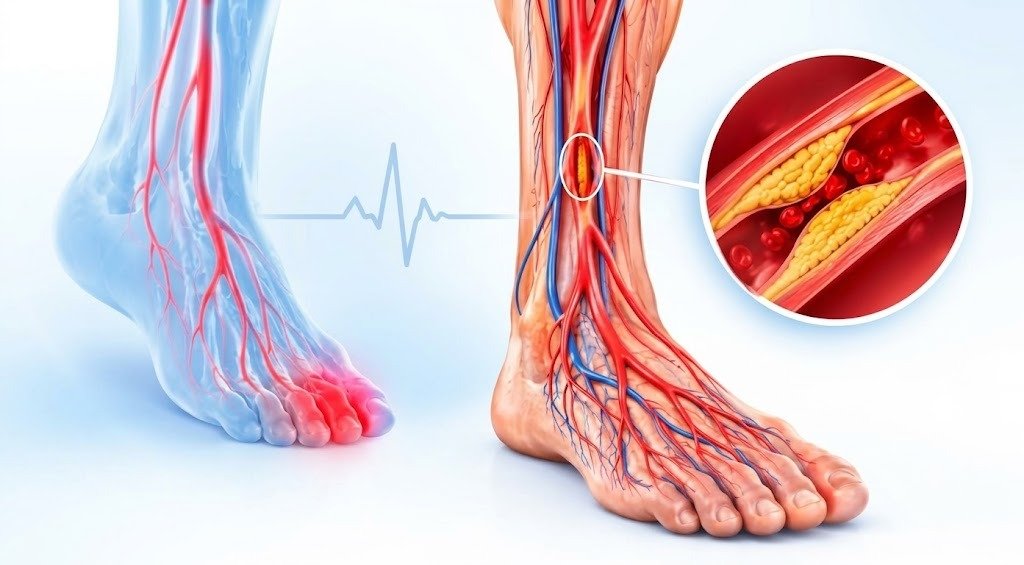
What Is Limb Salvage Surgery?
Limb salvage surgery is a set of procedures that restore blood flow to a poorly supplied leg or foot. The goal is limb preservation and avoiding amputation.
Why is limb salvage surgery needed?
The foot sits at the far end of the leg’s blood supply, so it runs short first when the arteries are severely blocked. Without enough oxygen, tissue cannot repair itself, waste products build up, and even a small cut can become a wound that never closes. If this continues, the tissue dies.
Doctors call this stage chronic limb-threatening ischaemia (CLTI), the advanced form of peripheral artery disease (PAD), also called critical limb ischaemia. It causes:
- Wounds that do not heal
- Infection that is harder to control
- A cold, pale or bluish foot
- Severe pain, especially at night
- Tissue death and blackening (gangrene)
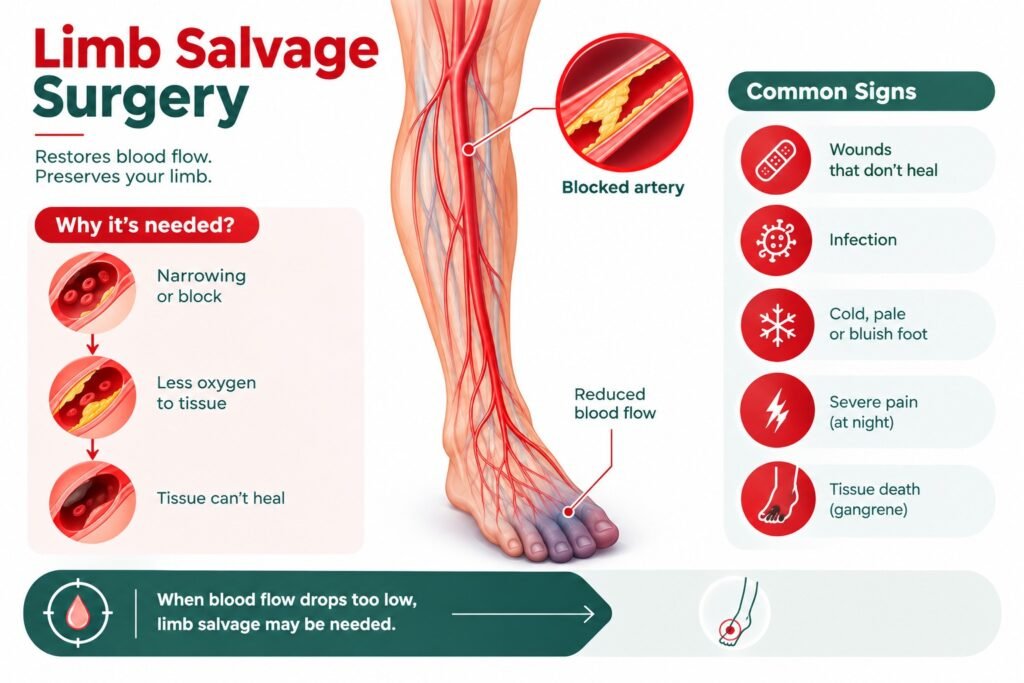
As arteries narrow or block, blood flow to the foot drops. When oxygen supply becomes too low for the tissue to heal, limb salvage may be needed.
Critical Limb Ischemia Causes
The most common cause is atherosclerosis, where plaque builds up inside the arteries. High blood sugar, high blood pressure and smoking damage the artery lining. Cholesterol settles in the damaged areas and forms plaque, which narrows the artery and slows blood flow.
- Diabetes: damages blood vessels and nerves
- Smoking/tobacco: injures and narrows arteries
- High blood pressure and cholesterol: speed up plaque build-up
- Chronic kidney disease, age over 50 and family history: raise the risk
- Less common: blood clots (embolism) and inflamed blood vessels (vasculitis)
The limb usually gives warnings before permanent damage.
Reach Out for Expert Care
Critical Limb Ischemia Symptoms
Common symptoms of critical limb ischemia are leg pain while walking, night-time foot pain and non-healing wounds.
Early signs
- Calf or thigh cramps while walking that ease with rest
Advanced signs
- Burning foot pain at night that eases when the leg hangs down. Lying flat removes gravity’s help with blood flow.
- Ulcers on the toes, heel or ankle that do not heal
- Cold, pale, bluish, shiny or hairless foot skin
- Black, dry or foul-smelling skin, which may indicate gangrene
A non-improving diabetic foot wound or sudden colour change needs prompt vascular review.
What Happens If Limb-Threatening Ischemia Is Left Untreated?
Untreated limb-threatening ischaemia can lead to infection, gangrene and amputation, while also increasing the risk of heart attack and stroke.
- Infection: Can spread to the bone (osteomyelitis) or bloodstream (sepsis)
- Gangrene: Dead tissue cannot be revived
- Amputation: May be necessary when the limb is beyond repair.
Early diagnosis and timely treatment can help prevent complications and improve the chances of saving the limb.
Critical Limb Ischemia Diagnosis
Diagnosis of critical limb ischemia has three steps: checking blood flow, finding the blockage and assessing the wound.
Checking Blood Flow
- Physical examination: pulses at the thigh, knee and ankle are felt, along with skin colour, temperature and wound depth. A weak or absent pulse shows where blood flow drops.
- Ankle-brachial index (ABI): compares blood pressure at the ankle and arm. A much lower ankle reading suggests a blockage in between.
- Toe pressure: in diabetes, stiff ankle arteries can make the ABI falsely normal, so toe pressure is more reliable.
Finding the Blockage
- Duplex Doppler: an ultrasound that shows blood flow and narrowing without needles, dye or radiation.
- CT angiography: dye is injected into a vein and CT scans map where blockages are and how long they are.
- Angiography: a catheter, usually passed through the groin, releases dye into the artery while X-rays outline it. Some blockages can be treated in the same sitting.
Assessing the Wound
- Blood tests: check sugar control, kidney function and infection.
- X-ray: shows whether infection has reached the bone.
- Heart check: leg and heart artery disease often coexist, which affects planning.
These tests together show where the artery is blocked and how the wound is doing, which is what treatment planning depends on.
What happens during Limb Salvage Surgery?
Limb salvage treatment has two goals: reopen the blocked artery and heal the wound. Which option suits you depends on where the blockage is, how long it is, your overall health and whether a suitable vein is available.
Improving Blood Flow
Endovascular treatment
A thin tube (catheter) is passed into the artery through a small puncture, usually in the groin, often under local anaesthesia.
- Balloon angioplasty: a tiny balloon is inflated at the blockage, pressing plaque against the artery wall to widen the channel.
- Stenting: a small mesh tube is left inside to hold the artery open.
- Drug-coated balloons: the balloon releases medicine that lowers the chance of re-narrowing.
Hospital stay is usually shorter and the procedure can be repeated, though the artery may narrow again.
Open surgery
It needs a larger incision and a longer stay, but may last longer in suitable patients.
- Bypass: a graft, either the patient’s own vein or a synthetic tube, is stitched above and below the blockage so blood flows around it like a diversion road.
- Endarterectomy: the artery is opened and the plaque is cleaned out directly.
Hybrid approach
Both methods are combined, sometimes in one sitting, such as clearing plaque from a large artery and using a balloon on a smaller one below it.
Wound Care
- Debridement: removes dead and infected tissue so healthy tissue can grow
- Infection control: antibiotics and dressings
- Offloading: special footwear or a cast takes pressure off the wound
Medicines and Lifestyle
- Antiplatelets: stop platelets clumping, lowering clot risk
- Statins: lower cholesterol and slow plaque growth
- Sugar and blood pressure control, and quitting smoking
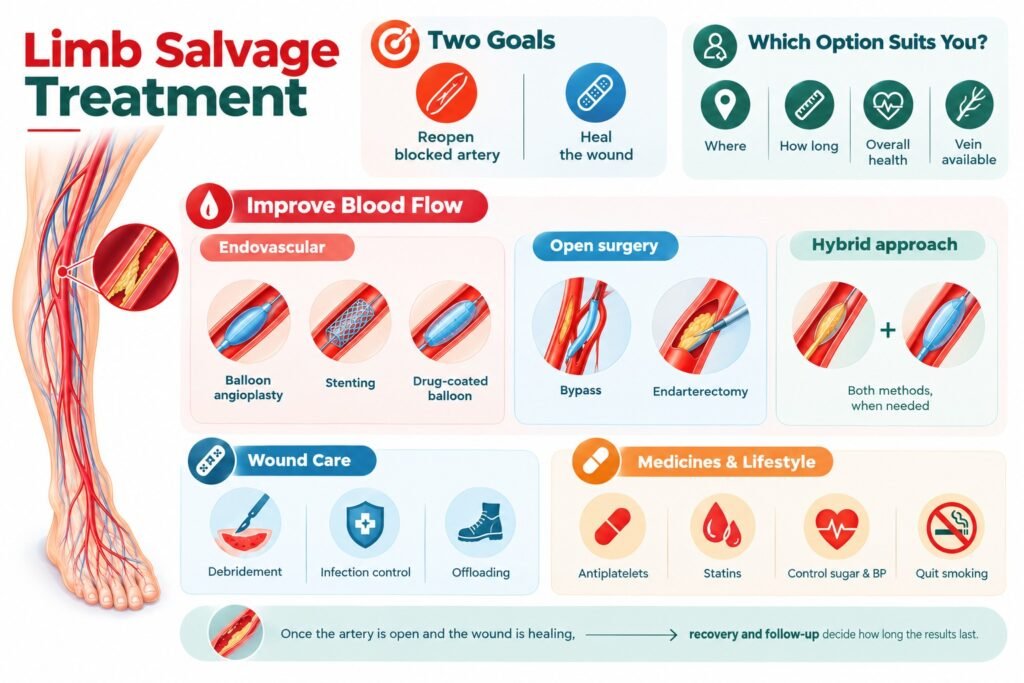
Once the artery is open and the wound is healing, recovery and follow-up decide how long the results last.
Limb Salvage Surgery Recovery
Angioplasty patients usually go home sooner than bypass patients, and wounds can take weeks to months to heal.
Some recovery tips after limb salvage surgery are:
- Walk gradually as advised
- Take medicines regularly
- Attend follow-up scans
- Inspect your feet daily
- Never walk barefoot
Recovery takes time, but following your doctor’s advice and protecting your limb can help you heal safely and reduce the risk of complications.
Limb Salvage Surgery Cost in Delhi NCR
The cost of limb salvage surgery in Delhi NCR starts from ₹1.5 lakh and can go upto ₹4.5 lakh.
- Angioplasty or stenting: ₹1.5 – ₹4 lakh approximately
- Bypass surgery: ₹1.5 – ₹4.5 lakh approximately
These costs can vary depending on:
- Complexity of case
- Hospital and duration of stay
- Other health conditions of the patient.
A precise estimate can be given by an expert after proper evaluation of the case
Reach Out for Expert Care
Why Choose Dr. Biswarup Purkayastha for Limb Salvage Surgery?
Dr. Biswarup Purkayastha is Consultant, Heart & Lung Transplant and Vascular Surgery at Artemis Hospitals, Gurugram. His qualifications and training include:
- MBBS and DNB/DrNB in Cardiothoracic Surgery
- Greenlane Fellowship in Adult Cardiothoracic Surgery & Heart-Lung Transplantation, New Zealand
- Toronto-Vienna Lung Transplant Academy Training, Vienna General Hospital, Austria
- MEBCTS (European Board of Cardiothoracic Surgery)
- 13+ years of experience; 2,000+ cardiac surgeries
His experience across heart and vascular surgery helps plan limb salvage treatment around each patient’s circulation and overall heart health.
Book a Consultation for Limb Salvage Surgery in Delhi NCR
If you are noticing non-healing wounds and night-time leg pain, an earlier evaluation is the next right step. At your consultation, Dr. Purkayastha will:
- Review your symptoms, medical history and existing reports
- Examine your legs, feet, pulses and wounds
- Recommend required tests
- Build a treatment plan specific to you
Early consultation helps identify the cause and guide the right treatment.
Frequently Asked Questions
Q1. What is the success rate of limb salvage surgery?
Ans. With timely treatment, many patients can successfully save their limb and avoid major amputation. Outcomes depend on the severity of blockage, wound and overall health.
Q2. How long does limb salvage surgery take?
Ans. It usually takes 2–6 hours, depending on the procedure and severity of the blockage.
Q3. Who needs limb salvage surgery?
Ans. It may be needed for people with non-healing foot wounds, constant pain at rest, or gangrene/blackened skin due to poor blood flow.
Q4. Who is the best doctor for limb salvage surgery in Delhi NCR?
Ans. Dr. Biswarup Purkayastha, Consultant at Artemis Hospitals, Gurugram, is one of the leading cardiothoracic surgeon in Delhi NCR with 13+ years of experience in cardiothoracic and vascular surgery.
Q5. Does Dr. Biswarup Purkayastha treat patients from Delhi NCR?
Ans. Yes. He practises at Artemis Hospitals, Gurugram, and treats patients from across Delhi NCR for CABG, valve surgery, aortic surgery and heart/lung transplants.

Dr. Biswarup Purkayastha's Medical Content Team
Dr. Biswarup Purkayastha's Medical Content Team is committed to providing accurate, reliable, and easy-to-understand information on heart and lung health. Working closely with cardiothoracic and transplant specialists, the team ensures that every article is medically reviewed, up-to-date, and designed to help patients and their families better understand heart and lung conditions, treatment options, transplant care, and recovery.
 WhatsApp